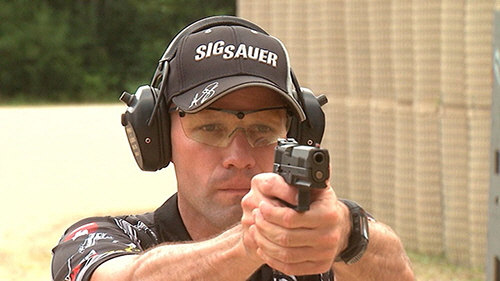
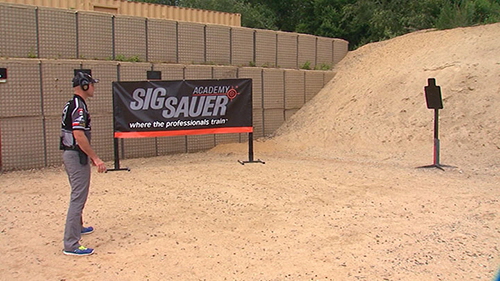
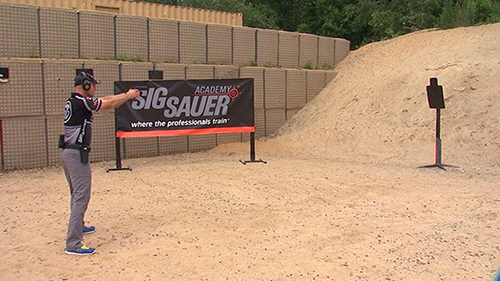
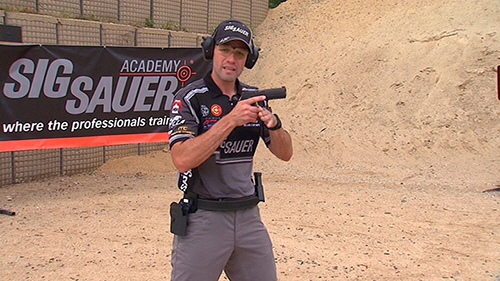
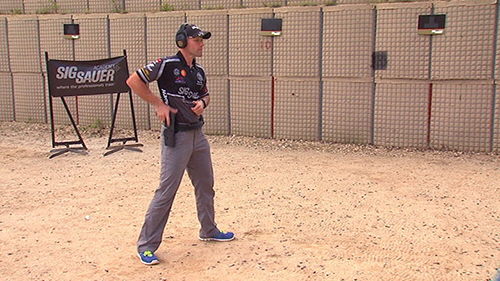
It’s a stimulus that starts the draw stroke, whether it’s the buzzer on a clock, or a perceived threat down range. The time it takes for me to activate the trigger on target, with a draw stroke, is what we are going to be covering in today’s Pro Tip.
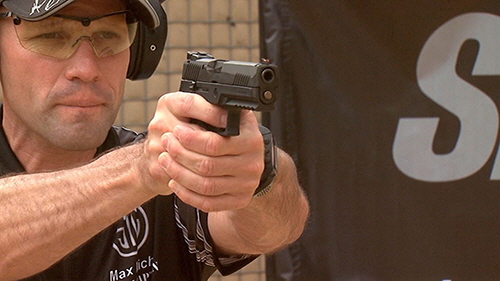
Now, I am going to teach this in three separate key steps. Step one is simply getting to the gun. Step two is where the hands will meet. Step three is acquiring my sights on target down range.
Now let's back track and talk about what it is to get there.
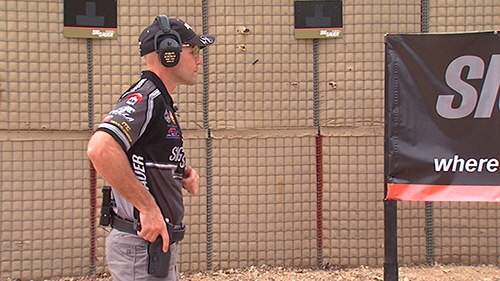
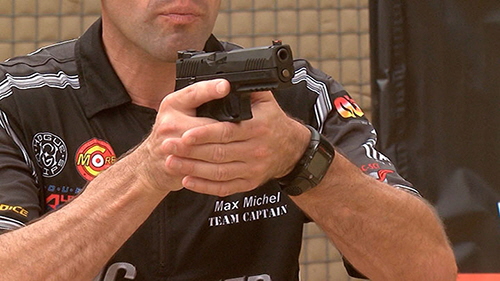
Step one, as my hand is coming to the gun, the web of my firing hand is going to get as high as possible on the back strap of the pistol, and the second point of contact is that middle knuckle underneath the trigger guard. All while my support hand is coming up to the front of my chest ready to accept the pistol.
As I am getting that second point of contact in the holster, the gun is going to come out of the holster, and I am looking for that third point of contact with my support hand underneath the trigger guard. If I am running a safety, my safety is still on and my finger is out of the trigger at this point.
Extra motion means extra time on the clock, so we want to be sure to streamline our draw stroke into the three separate steps that we’ve talked about, but a common error that I see is, if going to the gun in position one, if the second point of contact makes contact with the pistol first. What will happen as it comes out of the holster, it will look quick, but now the gun is mounted high into my hand. It's going to cause me to be slow on target at a high rate of speed, or I will simply have to adjust my grip before I extend down range.
Consistency and repeatability is key, not only to perfecting my draw stroke, but also to making sure that I am going to be able to perform that draw stroke at a high rate of speed, through dry fire. Dry fire is extremely important and a great way to perfecting your draw stroke. It gives me the ability to run 70 percent of my dry fire at half speed. So in a stressful situation when it arises, whether it’s combatively or competitively, I can revert back to that training and go at a high rate of speed with proper technique.
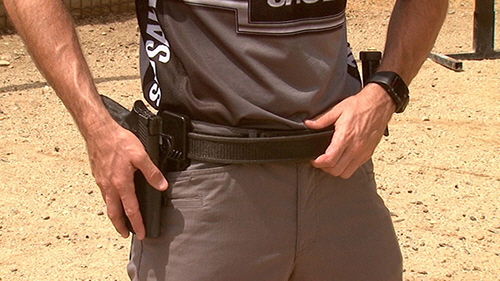
Lastly, gear selection and gear placement is going to be critical as well to get a consistent smooth draw stroke to the target. Running an inner and an outer belt system allows me the ability to place my holster in the same spot each and every time for consistency and repeatability, which will equal success.
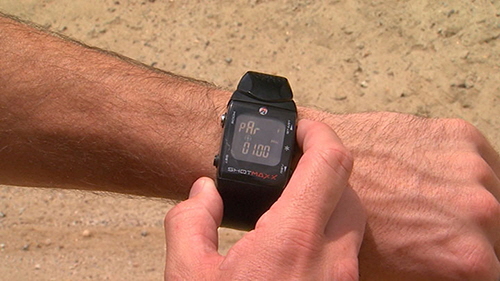
I am going to go ahead and load up the pistol here. I am going to set my par time for one second. That is going to put me in that threshold where everybody wants to be, whether your stimulus is an audible start signal, or a reaction to a threat down range.
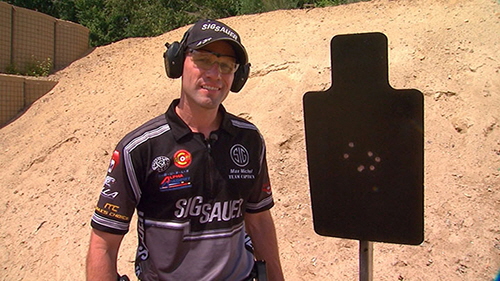
One second sounds fast but you still have to have the proper technique to ensure you are going to get a good hit down range. That’s acceptable accuracy with a good clean draw stroke each and every time for consistency. Now it's up to you to take it to the range and maximize your potential.