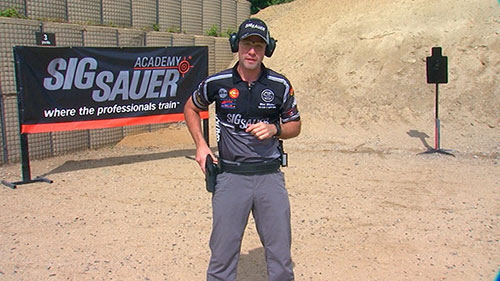
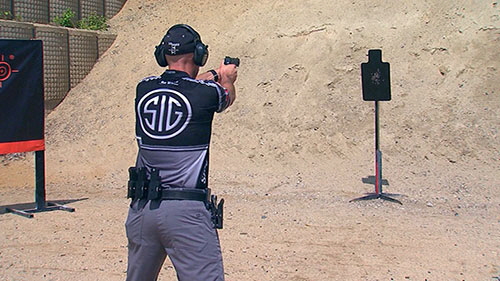
There are two key aspects to recoil management, the stance and the grip. Let's get right into the stance.
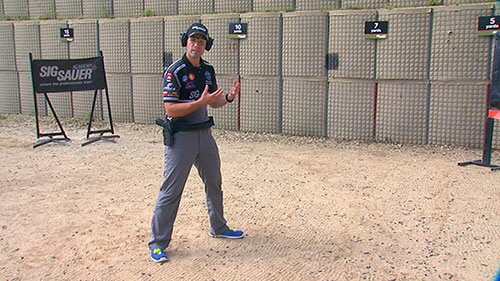
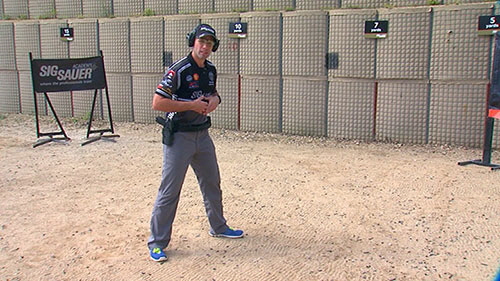
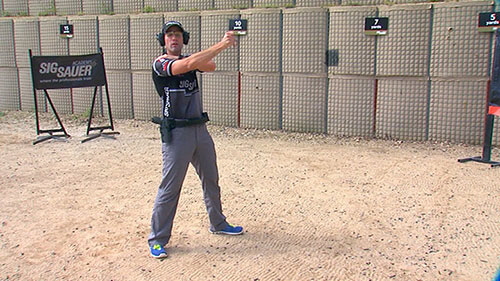
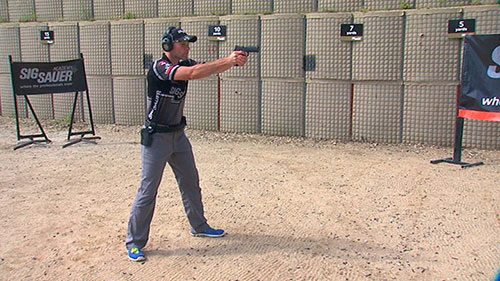
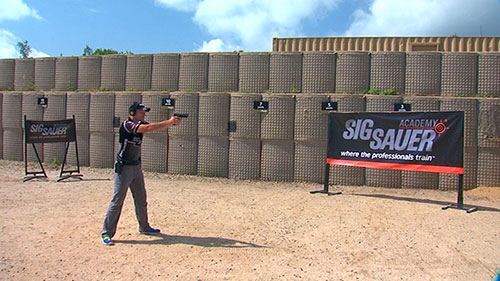
To be able to shoot quickly while remaining accurate I need to make sure I am balanced and stable to make that happen. My strong foot is slightly to the rear and my stance is wider than shoulder width apart.
My knees will be bent bringing 70 percent of my weight to the balls of my feet, which will push weight forward into the gun.
My upper body is very much relaxed but I am slightly leaning over at the waist.
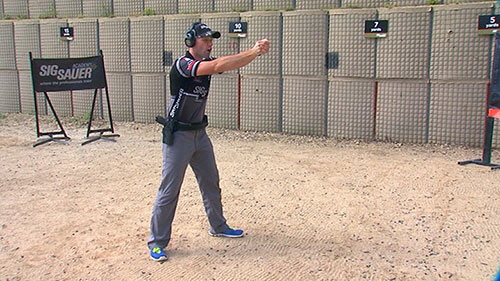
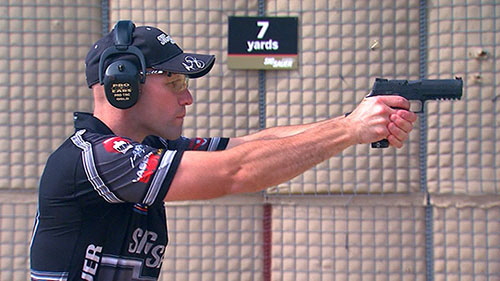
My arms are as far out as I can possibly take them without locking the elbow. I need my elbows to act as a shock absorbers, with the pistol and the energy from the pistol, before it hits me in the back of the shoulder blades, causing me to rock back onto my heels.
My shoulders are down and into their sockets and this is where the speed comes from.
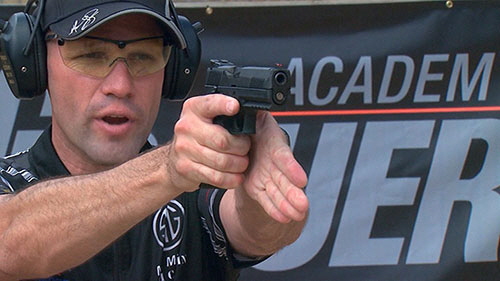
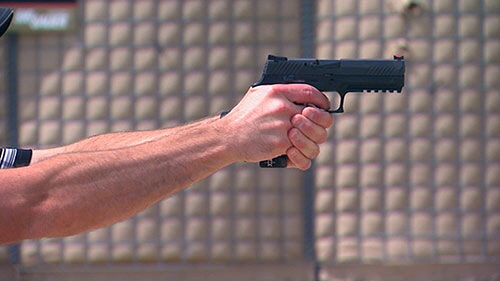
Ultimately we want to get as high as possible on the pistol to win that leverage battle, or essentially have a mechanical advantage on the pistol before it lifts in recoil. To accomplish that, I want to take two points of contact with my firing hand. The first point of contact is the web as high as possible on the back strap of that pistol.
Second point of contact is just in front with middle finger knuckle under the trigger guard, again getting as high as I possibly can get.
So again, take that third point of contact and place it underneath the trigger guard just like so.
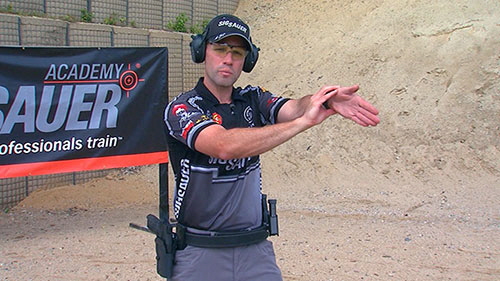
Next, as I am pointing straight down range towards a down range target, I want to make sure that my support hand is at a 45-degree angle downward. Essentially what it does is it locks my wrist into place creating that mechanical advantage against that pistol before it lifts in recoil.
So as the gun is trying to lift up and back, my support hand is already locked into position, and with that traction of the stippling of the grip or grip tape, or whatever you might want to put on your grip itself to give you that enhancement, is going to allow me to keep the gun flat on target to be able to shoot at a high rate of speed with acceptable accuracy.
The last element of the grip is grip pressure. I have about 30 to 40 percent of the pressure in my firing hand and 60 to 70 percent with my non-firing hand. The reason why I have less pressure with shooting hand is so I can manipulate the trigger nice and smooth to the rear, if I need to make an accurate shot, but I can also shoot more rapidly that way.
So what is 30 to 40 percent? If I had a hammer in my hand and I was driving a nail into a piece of wood, that’s about how much pressure I have with my shooting hand, and my support hand just twice as much pressure.
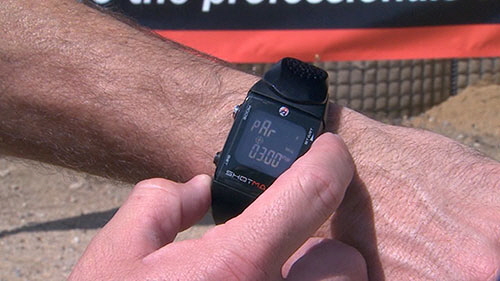
One of my favorite drills to work on recoil management is Twenty Alpha. It’s four strings shot from one position onto on single target. I am going to set my par time to whatever I can push myself, but also get successful hits down range. So I am going to give myself three seconds to draw and fire five shots, holster, and repeat for a total of 20 successful hits on target.
As I get more and more successful at this I am going to decrease my par time by five to 10 percent continuing to push myself until I can once again work on my recoil management and get better and better. Now it’s up to you to take it to the range and maximize your potential.